Transceiver explained:Types, Working, Applications
1. What is a transceiver?
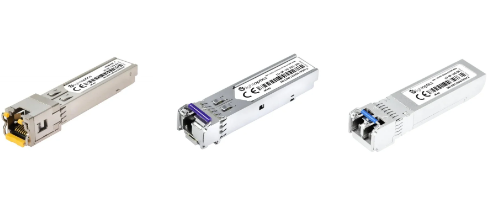
A transceiver is a device that combines the functions of a transmitter and a receiver in a single unit. It allows for bidirectional communication, meaning it can both transmit and receive signals. The transmitter part of the transceiver converts information into a suitable signal for transmission, while the receiver part receives and demodulates incoming signals for further processing.
Transceivers are commonly used in various communication systems, including wired and wireless applications. They play a critical role in enabling data transfer, voice communication, and other forms of information exchange. They can operate in different frequency ranges and utilize different communication technologies based on the specific application they are designed for.
In addition to transmitting and receiving signals, transceivers may also include additional functionalities such as signal amplification, modulation/demodulation, encoding/decoding, filtering, and data processing. They can be found in a wide range of devices including mobile phones, radios, satellite systems, computer networks, and many other communication systems.
2.How transceivers work?
(simplified version of the transceiver’s operation.)
The working principle of a transceiver depends on the specific technology and application. However, here is a general overview of how a transceiver functions:
Transmission:
Data Encoding: The transceiver processes the data to be transmitted and encodes it into a suitable format. This may involve techniques such as modulation or encoding schemes to convert the data into a specific signal format.
Amplification: The encoded signal is then amplified to increase its strength before transmission. This is necessary to ensure that the signal can reach the desired distance or destination without significant loss.
Transmission: The amplified signal is transmitted over the desired medium, such as wires or wireless channels. This can involve sending electrical signals through conductive mediums or converting them into electromagnetic waves for wireless transmission.
Reception:
Signal Reception: The transceiver receives the transmitted signal, either through a physical connection (wires) or by capturing the electromagnetic waves (wireless). It relies on antennas or receivers to capture the incoming signal.
Demodulation: The received signal is demodulated to extract the original encoded data. This process involves undoing the modulation technique applied during transmission.
Filtering and Amplification: The demodulated signal may undergo filtering to remove noise or unwanted frequencies. It may also be amplified to improve its quality and prepare it for further processing.
Data Extraction: The filtered and amplified signal is then processed to extract the original data. This can involve additional decoding, error correction, or decryption techniques depending on the communication protocol or encoding scheme used.
The above steps describe a simplified version of the transceiver’s operation. In reality, transceivers can be much more complex, incorporating various technologies and signal processing techniques to ensure reliable and efficient communication. The specific working details may vary depending on the type of transceiver, communication standard, or the application it is designed for.
3.Classification of Transceivers
Based on Transmission Medium:
Wireline Transceivers: These transceivers are used for transmission over wired mediums such as copper cables or optical fibers.
Wireless Transceivers: These transceivers are used for transmission over wireless mediums such as radio waves or infrared signals.
Based on Communication Technology:
Analog Transceivers: These transceivers operate with analog signals, commonly used in older communication systems.
Digital Transceivers: These transceivers operate with digital signals, providing improved signal quality, error correction, and encryption.
Based on Frequency Range:
Radio Frequency (RF) Transceivers: These transceivers operate in the radio frequency range (commonly divided into bands like HF, VHF, UHF, etc.).
Microwave Transceivers: These transceivers operate in the microwave frequency range, typically used in applications like satellite communication or radar systems.
Millimeter-wave Transceivers: These transceivers operate in the high-frequency millimeter-wave range (30 GHz to 300 GHz), commonly used in high-speed wireless communication systems like 5G.
Based on Application:
Telecom Transceivers: These transceivers are designed for telecommunications applications, including wired and wireless communication systems.
Networking Transceivers: These transceivers are used in networking equipment to enable data transmission over various mediums like optical fibers, Ethernet cables, or Wi-Fi.
Satellite Transceivers: These transceivers are used for communication with satellites, enabling long-distance communication and data transfer.
Consumer Electronics Transceivers: These transceivers are found in various consumer devices for wireless communication, such as smartphones, tablets, or smart home devices.
Industrial Transceivers: These transceivers are designed for use in industrial environments, often ruggedized and capable of operating in harsh conditions.
Applications
Wired Transceivers:
Ethernet Transceivers: These transceivers are commonly used in computer networks to enable communication between devices over Ethernet cables. They convert electrical signals into digital data packets and vice versa, allowing for high-speed data transfer.
Power Line Communication Transceivers: These transceivers utilize power lines for data transmission. They enable devices to communicate with each other through existing electrical wiring, often used in smart grids, home automation systems, and industrial control systems.
Wireless Transceivers:
WiFi Transceivers: These transceivers enable wireless communication between devices within a local area network. They operate on various WiFi standards such as 802.11a/b/g/n/ac/ax and allow for internet connectivity, file sharing, and wireless device-to-device communication.
Bluetooth Transceivers: Bluetooth transceivers facilitate short-range wireless communication between devices, typically within a range of a few meters. They are commonly in wireless audio devices, mobile phone accessories IoT devices, and personal area networks.
Cellular Transce: These transceivers are used in mobile communication networks, enabling wireless voice and data transmission over long distances. They support different cellular standards such as GSM, CDMA, LTE, and 5G, allowing for mobile phone communication, internet access, and various mobile services.
Satellite Transceivers: Satellite transceivers facilitate communication with satellites for data transmission over large distances. They are used in satellite communication systems for applications such as satellite TV, weather monitoring, and global positioning.
Other Applications:
Radio Transceivers: These transceivers are used in radio communication systems, such as two-way radios, walkie-talkies, and amateur radio equipment.
Optical Transceivers: Optical transceivers convert electrical signals to optical signals and vice versa, enabling communication through optical fibers in high-speed networks such as fiber optic communication systems.
4.How to choose a good Transceiver
5.What are the example of transceiver devices?


Frequently Asked Questions
Related Articles

What is Series Parallel Circuit? Formula, Diagram, Calculator
Potentiometers Classifications Explained: Construction, Application
What is Peak-to-Peak Voltage, AC Peak vs. Peak-to-Peak vs. RMS Voltage
Outdoor vs. Indoor TV Antennas: How They Work?
SO-DIMM vs DIMM vs UDIMM Difference: Understanding Meaning and Types
Time Delay Relay: Definition,Modes,Diagram
How to use a Relay: Comprehensive Guide for Relays Types and Uses
What is a Projector: Working Principle and Types
Detailed Inductors Classifications
Unveiling the Complexities of AI Face Recognition: Algorithmic Bias, Ethics, and Regulation
Apple’s NameDrop in iOS 17: Advantages, Disadvantages, and Proper Usage
How to Erase Your Personal Data from Public Record Websites