How to use a Relay: Comprehensive Guide for Relays Types and Uses
Hi,there! This is a blog about How to use a relay: Types of Relays and Uses
Catalog
What is a relay?
*Construction
*Pinout
How does Relay Works?
How does a relay work on an AC and DC circuit?
Types of Relays
Common Classification of Relays
Uses of Relays
How to choose a good relay?
How to Connect a Relay in a Circuit?
Introduction:
Relays are essential components in electrical circuits that allow the control of high-power devices or signals using low-power signals. They provide isolation, protection, and automation, making them versatile devices in various applications. In this article, we will explore what relays are, how they work, their types, common uses, and tips on choosing and connecting relays in circuits.
I.What is a Relay?
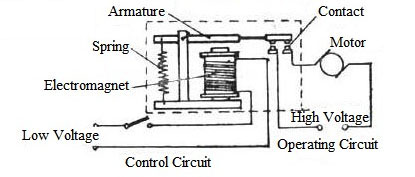
A relay is an electrically operated switch that uses an electromagnet to control the flow of current in a circuit. It consists of a coil, an armature, and a set of contacts. When a current passes through the coil, it generates a magnetic field that attracts or releases the armature, thereby opening or closing the contacts.
*Construction
*Pinout

II.How does a Relay Work?
When the coil of a relay is energized, the armature is attracted, and the contacts close, allowing current to flow through the circuit. Conversely, when the coil is de-energized, the armature returns to its original position, and the contacts open, interrupting the current flow. This mechanism allows relays to control circuits with higher voltages or currents than the control signal itself.
III.How does a Relay Work on an AC and DC Circuit?
Relays can work with both AC (alternating current) and DC (direct current) circuits. The basic functioning principle remains the same. However, AC relays are designed to handle the constant changes in direction of the current flow, while DC relays are optimized for unidirectional current flow.
IV.Types of Relays:
1. Electromechanical Relays: These are the most common relays, utilizing electromagnetic coils to control the contacts. They can handle various currents and voltages and are available in different configurations, such as single-pole single-throw (SPST), single-pole double-throw (SPDT), and more.
2. Solid-State Relays (SSRs): SSRs use semiconductor switching elements, such as thyristors or transistors, to control the circuit. They have no moving parts, making them faster, more durable, and immune to mechanical wear.
3. Reed Relays: Reed relays consist of a coil, an armature, and contacts enclosed within a sealed glass tube. The contacts are made of thin, magnetically sensitive metal reeds. When a magnetic field is applied, the reeds attract and complete the circuit.
V.Common Classification of Relays
Relays can be classified into various types based on different criteria. Here are some common classifications of relays:
1. Based on Construction:
a. Electromechanical Relays: These relays use an electromagnet to control the switching of contacts. They can have different configurations, including SPST (Single Pole, Single Throw), SPDT (Single Pole, Double Throw), DPST (Double Pole, Single Throw), and DPDT (Double Pole, Double Throw).
b. Solid-State Relays: These relays use solid-state components like transistors and thyristors to perform the switching operation. They offer faster switching, high reliability, and longer lifespan compared to electromechanical relays.
2. Based on Switching Mechanism:
a. Normally Open (NO) Relay: In its resting state, the contacts of this relay are open, and when the relay is energized, the contacts close.
b. Normally Closed (NC) Relay: In its resting state, the contacts of this relay are closed, and when the relay is energized, the contacts open.
3. Based on Number of Poles and Throws:
a. SPST Relay: Single Pole, Single Throw relay has one set of normally open or normally closed contacts.
b. SPDT Relay: Single Pole, Double Throw relay has one set of common contacts and two sets of contacts that can be connected to either the normally open or the normally closed position.
c. DPST Relay: Double Pole, Single Throw relay has two sets of contacts that can simultaneously open or close.
d. DPDT Relay: Double Pole, Double Throw relay has two sets of common contacts and two sets of contacts that can be connected to either the normally open or the normally closed position.
4. Based on Application:
a. Automotive Relays: These relays are specifically designed for automotive applications and are used in vehicles for various functions like starting motors, controlling lights, and operating fans.
b. Power Relays: These relays are used in power systems to control high-power circuits, such as in motor control, power distribution, and protection applications.
c. Signal Relays: These relays are used in low-power circuits for signal switching, such as in telecommunications, measurement devices, and control systems.
VI.Uses of Relays:
Relays have numerous applications across industries. Here are a few common uses:
1. Industrial Automation: Relays are widely used in industrial automation systems to control motors, solenoids, valves, and other high-power devices.
2. Automotive: Relays play a crucial role in automotive applications, such as controlling headlights, starter motors, power windows, and fuel pumps.
3. Home Automation: Relays are employed in home automation systems to control lighting, appliances, and HVAC systems.
4. Power Systems: Relays are used for protection and control in power systems. They detect faults and isolate sections of the network to prevent damage.
VII.How to Choose a Good Relay?
When choosing a relay, consider the following factors:
1. Operating Parameters: Determine the required voltage, current, and load capacity the relay needs to handle.
2. Contact Configuration: Select the appropriate contact configuration (SPST, SPDT, etc.) based on your circuit requirements.
3. Coil Voltage: Choose a relay with a coil voltage compatible with the control signal source.
4. Switching Speed: Consider the response time required for your application. Electromechanical relays have mechanical switching delays, while solid-state relays provide faster switching.
VIII.How to Connect a Relay in a Circuit?
To connect a relay in a circuit, follow these general steps:
1. Identify the relay's coil terminals: The relay datasheet will indicate the coil terminals. Usually, one terminal connects to the control signal source, while the other connects to a common ground.
2. Connect the control signal: Apply the appropriate voltage or current to energize the relay coil.
3. Connect the load: Connect the load (the device you want to control) to the relay's contact terminals. Ensure the load's voltage and current requirements are within the relay's ratings.
Conclusion:
Relays are versatile devices that enable the control of high-power circuits using low-power signals. By understanding the types of relays available, their working principles, and common applications, you can select the right relay for your circuit and effectively control various devices. Remember to consider operating parameters, contact configuration, coil voltage, and switching speed when choosing a relay and follow the datasheet instructions when connecting it in a circuit.


Frequently Asked Questions
Related Articles

PMIC Selection and Design Considerations
Digital to Analog Audio Converters Demystification
Microwave Diode Test:Replacement,Cost,Diagram
What Is Fiber Optic Attenuator:Working,Types,How to choose?
Pull-Up & Pull-Down Resistors Difference, Pros & Cons, Selection
Unveiling Metal Oxide Resistors: Mastering Current Control
555 Timer: Applications, Pinout, Pros & Cons
Smoke Detector Installation and Testing|How Many Do You Need?
Solid State Drives Inner Workings And Diverse Varieties
How do Hard Disk Drives Work? Operation, Types Explain
Ultimate Tutorial to JTAG: Understanding the Basics and Operation
What is USB Cable, How to Install a USB Expander?