Microwave Diode Test:Replacement,Cost,Diagram
Introduction
Microwave diodes are essential components in various high-frequency applications, including radar systems, satellite communications, and mobile phone networks. These specialized semiconductors function as switches, mixers, detectors, and other critical elements in microwave circuits. Maintaining the performance and reliability of microwave diodes requires regular testing and, when necessary, replacement. This article provides a comprehensive guide to testing, replacing, and understanding the costs associated with microwave diodes.
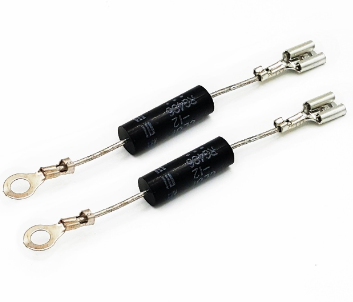
Testing Microwave Diodes
Testing microwave diodes involves verifying their electrical characteristics and ensuring they meet the required specifications. Several methods can be employed for testing, each with its advantages and limitations.
1. DC Testing:
DC testing involves measuring the diode's forward voltage drop and reverse leakage current. This basic test helps identify gross defects like open or short circuits. However, it doesn't provide information about the diode's high-frequency performance.
2. RF Testing:
RF testing involves measuring the diode's S-parameters, which characterize its impedance, gain, and reflection properties at microwave frequencies. This method provides a more comprehensive assessment of the diode's performance under actual operating conditions.
3. Noise Figure Measurement:
Noise figure measurement determines the amount of noise added by the diode to the signal. This is crucial for applications where low noise performance is critical, such as in low-noise amplifiers.
4. Harmonic Distortion Measurement:
Harmonic distortion measurement quantifies the generation of unwanted harmonics by the diode. This is important for applications where signal purity is essential, such as in oscillators and mixers.
Microwave Diode Replacement
When a microwave diode fails or its performance degrades, replacement becomes necessary. Selecting the appropriate replacement diode requires careful consideration of several factors:
1. Electrical Specifications:
The replacement diode must have electrical specifications (forward voltage, reverse current, capacitance, etc.) that match or exceed the original diode's specifications.
2. Package Type:
The replacement diode must have the same package type as the original diode to ensure compatibility with the circuit board layout.
3. Frequency Range:
The replacement diode must operate within the same frequency range as the original diode to maintain the circuit's performance.
4. Cost:
The cost of the replacement diode should be considered, especially for high-volume applications.
Microwave Diode Cost
The cost of microwave diodes varies depending on several factors, including the type of diode, its electrical specifications, package type, and manufacturer. Generally, high-performance diodes with specialized characteristics tend to be more expensive than standard diodes. The cost can range from a few dollars for simple switching diodes to hundreds or even thousands of dollars for high-power or high-frequency devices.
Microwave Diode Diagram
A typical microwave diode symbol is shown below:
```
+------+
| |
| |
| |
---|------|---
| |
| |
+------+
A C
```
In this diagram, A represents the anode (positive terminal) and C represents the cathode (negative terminal). The arrow indicates the direction of conventional current flow.
Conclusion
Testing, replacing, and understanding the cost of microwave diodes are crucial aspects of maintaining the performance and reliability of microwave circuits. By following the guidelines outlined in this article, engineers and technicians can ensure that their microwave systems operate optimally and meet the required specifications.
Additional Resources:
Keysight Technologies: https://www.keysight.com/us/en/assets/7018-09886/application-notes/5989-2728.pdf
Microwave Journal: https://www.microwavejournal.com/articles/3337-testing-microwave-diodes
Texas Instruments:https://www.ti.com/lit/an/snoa952/snoa952.pdf


Related Articles

Uncovering the Secrets of Electronic Component Storage
Chip Shortage Ravages Automotive Industry: Impact Unavoidable