3D Printing Electronics: Revolutionizing the Future
Let's explore Revolution of Electronics: The Rise of 3D Printing for Electronic Components
![JJ]0BQJR)PI}KPLLHP1URD8](/upload/image/content/20231010/1b2822f8b3bbc353189efc08a43081ce.png "1b2822f8b3bbc353189efc08a43081ce.png")
Catalog
Introduction
The Basics of 3D Printing
Benefits of 3D Printing Electronic Components
Materials for 3D Printing Electronic Components
Applications of 3D Printed Electronic Components
Challenges and Future Outlook
Conclusion
Introduction:
The field of 3D printing has witnessed remarkable advancements in recent years, transforming various industries. One area that has particularly caught the attention of researchers and engineers is the integration of 3D printing technology with electronic components. This article explores the potential of 3D printing in revolutionizing the manufacturing and design of electronic components, and its implications for various sectors.
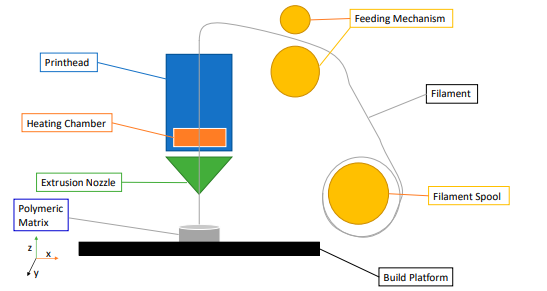
The Basics of 3D Printing:
3D printing, also known as additive manufacturing, is a process that creates three-dimensional objects by layering materials based on a digital design. Traditionally, 3D printing has been used for prototyping and manufacturing various physical objects. However, with advancements in materials and techniques, it is now possible to print electronic components as well.
Benefits of 3D Printing Electronic Components:
1 Customization and Design Flexibility:
One of the key advantages of 3D printing electronic components is the ability to customize designs according to specific requirements. This allows for the creation of unique shapes, sizes, and functionalities that are not easily achievable using traditional manufacturing methods. Designers can optimize the component’s form and function, leading to improved performance and efficiency.
2 Rapid Prototyping and Iteration:
3D printing enables rapid prototyping, significantly reducing the time and cost involved in the development cycle. Engineers can quickly produce functional prototypes, test different designs, and iterate until they achieve the desired performance. This accelerated iteration process promotes innovation and enables faster time-to-market for electronic devices.
3 Integration and Miniaturization:
By 3D printing electronic components, it becomes possible to integrate multiple functionalities into a single device. This integration eliminates the need for separate components, reducing the size, weight, and complexity of electronic systems. The ability to print complex geometries also opens up new possibilities for miniaturization, enabling the creation of smaller, more portable devices.
Materials for 3D Printing Electronic Components:
The choice of materials is crucial when 3D printing electronic components. Conductive materials, such as conductive polymers or graphene, are used to print conductive traces and circuits. Insulating materials, like ceramics or polymers, are used to encapsulate and protect the electronic components. Researchers are continuously exploring new materials with improved electrical and mechanical properties to expand the capabilities of 3D printed electronics.
Applications of 3D Printed Electronic Components:
1 Wearable Electronics:
The ability to print flexible and stretchable electronic components has opened up exciting possibilities in the field of wearable technology. From smart textiles to biometric sensors, 3D printed electronic components can be seamlessly integrated into clothing and accessories, revolutionizing the way we interact with technology.
2 Internet of Things (IoT) Devices:
The IoT relies on a vast network of interconnected devices. 3D printing allows for the rapid production of customized sensors, antennas, and other electronic components required for IoT devices. This flexibility enables the deployment of IoT solutions in various industries, from healthcare to agriculture, enhancing efficiency and connectivity.
3 Aerospace and Defense:
The aerospace and defense sectors can benefit greatly from 3D printed electronic components. The ability to create lightweight and complex designs allows for the production of optimized components for aircraft, satellites, and military equipment. This not only reduces weight and fuel consumption but also enhances performance and functionality.
Additionally, Here are more examples of 3D printed electronic components:
4.Printed Circuit Boards (PCBs): Traditionally, PCBs are manufactured using etching or milling processes. However, with advancements in 3D printing, it is now possible to directly print conductive traces and insulating layers to create custom PCBs. This allows for the integration of complex circuitry and reduces the need for additional components.
5.Antennas: 3D printing enables the creation of custom-shaped antennas, tailored to specific frequencies and applications. Antennas can be printed using conductive materials, such as silver ink or graphene, allowing for improved signal reception and transmission.
6.Sensors: 3D printing allows for the creation of customized sensors for various applications. For example, flexible and stretchable sensors can be printed onto textiles for wearable technology, enabling the monitoring of vital signs or motion detection. Additionally, environmental sensors, such as temperature or humidity sensors, can be integrated into 3D printed structures for IoT devices.
7.Energy Harvesting Devices: 3D printing can be used to create energy harvesting devices, such as solar cells or piezoelectric generators. These devices can be printed onto various surfaces, including curved or irregular shapes, enabling the integration of energy harvesting capabilities into everyday objects.
8.Microfluidic Devices: 3D printing can be utilized to create complex microfluidic devices for biomedical and chemical applications. These devices can incorporate channels, valves, and sensors to manipulate and analyze fluids on a small scale. The ability to 3D print these devices allows for rapid prototyping and customization.
9.Structural Electronics: 3D printing can be used to integrate electronic components directly into the structure of objects. For example, 3D printed drones can have embedded circuitry and sensors, eliminating the need for separate wiring and reducing weight. This approach enables the creation of lightweight and compact devices with enhanced functionality.
These examples highlight the versatility and potential of 3D printing in the realm of electronic components. As the technology continues to advance, we can expect to see even more innovative applications and the integration of 3D printed electronics into various industries.
Challenges and Future Outlook:
While 3D printing electronic components holds tremendous promise, there are still challenges to overcome. Ensuring consistent and reliable electrical conductivity, improving material properties, and scaling up production are areas that require further research and development. However, with ongoing advancements and collaborations between academia and industry, the future of 3D printed electronic components looks promising.
Conclusion:
3D printing is revolutionizing the manufacturing and design of electronic components, offering customization, rapid prototyping, and integration possibilities. The ability to print electronic components opens up new avenues for innovation in various sectors, including wearables, IoT, and aerospace. As researchers continue to explore new materials and techniques, 3D printed electronic components are set to reshape the way we perceive and utilize technology, unlocking new possibilities for the future.


Related Articles

Transceiver explained:Types, Working, Applications
Various Types of Diodes: A Comprehensive Classification
Single-Phase vs. Two-Phase Liquid Immersion Cooling:Which is Better
How to Add DS1307, DS3231, PCF8563 RTC with Arduino: Tutorial
What Is a Throttle Position Sensor (TPS) And How It Works
Exploring the Power of X Elite
Machine SCADA Expert: Transforming the Development of Electronic Components and Technology
Harnessing Electric Electromobiles to Combat Global Warming and Pollution
Foldable Phone Comparison: Top 4 Folding Phones
Wireless Keyboards: The Evolution of a Technological Marvel
What are PCBs, How do PCBs Work: Types, Applications
Raspberry Pi 5: The Next Generation of Single Board Computers